Egg Advice, Part 4
The Nutrional Problem
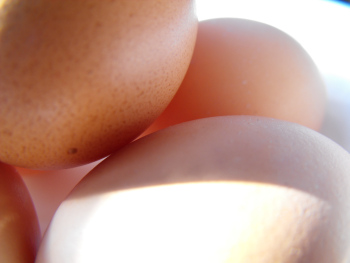 Eggs used to be called "nature's most
perfect food." Today, eggs
are out of balance, like most of our diets, containing little omega 3
fatty acids and an overabundance of omega 6 ones, for the simple reason
that chickens' main food now is corn. There are many ways to
correct this imbalance, such as substituting worms for corn. But
free ranging them or pasturing them is not enough.
Eggs used to be called "nature's most
perfect food." Today, eggs
are out of balance, like most of our diets, containing little omega 3
fatty acids and an overabundance of omega 6 ones, for the simple reason
that chickens' main food now is corn. There are many ways to
correct this imbalance, such as substituting worms for corn. But
free ranging them or pasturing them is not enough.
Studies have found that the omega 3 can be brought back in balance most
simply by adding 5% (five percent) flaxseed to their food ration.
I've
experimented with different ways of doing this other than paying double
for special formula chicken feed. Flax seeds sprout in about a
week,
so sprouts are one way. My chickens love a tray of ground flax
seed
and gobble it up in no time, but they waste a lot picking and flinging
it. What works best for me is to grind the seed (30 seconds in a
food
or coffee mill), add enough water to make a paste, and feed it in a
flat pan. It is gone in a couple of minutes with no waste.
Editor's Note from Anna: My hens
each eat three
quarters of a cup of laying pellets per day, so using Daddy's
math I should be giving each one about two teaspoons of flaxseed mash
per day. Dosages for your hens may vary slightly, but are
probably in the same ballpark. For those of you with a lot of chickens, there are 48 teaspoons in a cup.
| This post is part of our Egg Advice lunchtime series.
Read all of the entries: |
Or explore more posts by date or by subject.
About us: Anna Hess and Mark Hamilton spent over a decade living self-sufficiently in the mountains of Virginia before moving north to start over from scratch in the foothills of Ohio. They've experimented with permaculture, no-till gardening, trailersteading, home-based microbusinesses and much more, writing about their adventures in both blogs and books.
Want to be notified when new comments are posted on this page? Click on the RSS button after you add a comment to subscribe to the comment feed, or simply check the box beside "email replies to me" while writing your comment.
- Remove comment

- Remove comment