
Bad Bug Profile: Grubs
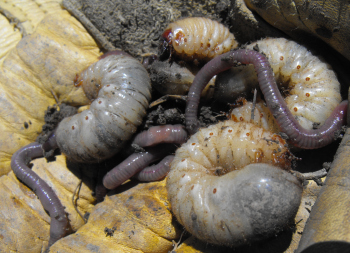 Whenever
I poke around in our soil, I usually come across some big white
grubs. Grubs are the larval form of scarab beetles, a large
family which includes over a thousand species in the U.S. and
Canada. The best known of these is the Japanese Beetle,
which can be identified by looking
at the nearly microscopic hair patterns at the butt end of the grub.
Whenever
I poke around in our soil, I usually come across some big white
grubs. Grubs are the larval form of scarab beetles, a large
family which includes over a thousand species in the U.S. and
Canada. The best known of these is the Japanese Beetle,
which can be identified by looking
at the nearly microscopic hair patterns at the butt end of the grub.
I consider grubs to be bad news, and in many cases they are since they
turn into pest beetles or eat plant roots. On the other hand,
some grubs are useful since they decompose organic matter in the
soil. Regardless, I toss them all into the chicken coop and watch
the hens fight over these fat bundles of protein, along with the worms
Mark adds to sweeten the pot.
|
Species: Many species in
Scarabaeidae (Scarab family) Plants Affected: Japanese Beetles (Popillia japonica) feed on the leaves of grapes, apples, plums, cherries, strawberries, and various ornamentals. Some grubs feed on plant roots. Related Species: Other common white grubs turn into June Beetles and several other species. Natural Enemies: Parasitic wasps, diseases including Milky Spore, nematodes. Organic Control: Traps may be worse than useless since they'll lure your neighbor's Japanese Beetles into your garden. Luckily, both the adults and grubs are very easy to handpick and the chickens love them. |
 Read other posts about Organic Insect Control: Read other posts about Organic Insect Control: |

Or explore more posts by date or by subject.
About us: Anna Hess and Mark Hamilton spent over a decade living self-sufficiently in the mountains of Virginia before moving north to start over from scratch in the foothills of Ohio. They've experimented with permaculture, no-till gardening, trailersteading, home-based microbusinesses and much more, writing about their adventures in both blogs and books.
Want to be notified when new comments are posted on this page? Click on the RSS button after you add a comment to subscribe to the comment feed, or simply check the box beside "email replies to me" while writing your comment.
Howdy Anna,
Sorry, to butt in on such an old post, but I really feel the need to set you straight here.
Though Japanese beetles were always a huge hazard to our rose bushes in NE Ohio and their grubs chomped away at the roots of our grass, not all grubs are harmful.
Guessing from your photo, there is really only one species these grubs can be. They are probably Dynasties tityus, or eastern hurcules beetle, an excellent composer that feeds only on dead, woody plant material.
Been loving the blog, btw. Found it looking for mushroom info, and have been reading it from the start for about a month now. How are those peach trees doing? Kidding,No spoilers please.
Thanks, Chuck Hofmeister